

Community, Culture, and Trust in an Age of Fractured Institutions
Why belonging and social infrastructure matter for rebuilding collective agency
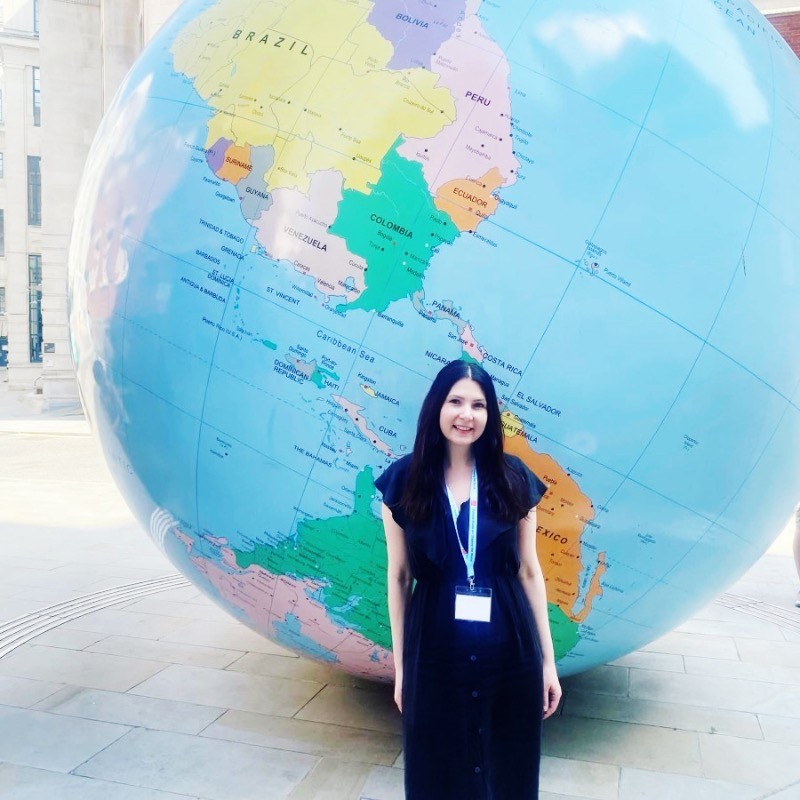
Contemporary societies are increasingly characterized by plurality. Across much of the world, individuals inhabit social environments shaped by diverse cultural traditions, knowledge systems, and institutional frameworks. The result is a social landscape in which encounters across difference have become an everyday condition of modern life. Processes associated with globalization, migration, and digital communication have intensified these encounters, bringing people into contact with perspectives that were once separated by geography or social boundaries.
The Digital Paradox
At the same time, the implications of these developments are not straightforward. While digital networks expand the reach of communication, some researchers argue that they can also fragment public discourse. Scholars such as Cass Sunstein and Eli Pariser suggest that algorithmically curated information environments may reinforce ideological echo chambers, limiting exposure to divergent viewpoints rather than expanding it.¹
The Crisis of Trust
Within such contexts, the question of trust becomes particularly significant. Across many democratic societies, social scientists have documented declining levels of both interpersonal and institutional trust. In the United States, survey data from the General Social Survey shows a long-term decline in the proportion of Americans who believe that most people can be trusted.² Public confidence in government has also fallen significantly from the levels recorded in the mid-twentieth century.³
While these developments are often framed primarily as political problems, they may also reflect deeper transformations in the social conditions through which trust is constructed. Trust does not exist solely within institutions. It is produced through relationships, shared experiences, and the environments in which individuals encounter one another as participants in a common social world.
Belonging as a Prerequisite
Closely connected to trust is the experience of belonging. Sociologists and social psychologists describe belonging as the sense that one is recognized as a legitimate participant within a social environment. When individuals feel that they belong, they are more likely to participate in civic life, engage constructively with institutions, and extend trust toward others. Conversely, when belonging erodes, distrust and withdrawal often follow.⁴
Trust and belonging do not emerge in a vacuum; they are shaped through culture. Culture provides the shared symbols, narratives, practices, and forms of meaning through which individuals interpret one another. These cultural frameworks influence how people perceive legitimacy, authority, and cooperation. In this sense, culture helps shape the conditions under which trust and belonging become possible.⁵
The Mechanics of Social Capital
To understand how trust forms within complex societies, sociologists often turn to the concept of social capital. Pierre Bourdieu examined how networks of relationships provide access to resources and reproduce forms of social power, while James Coleman explored how social structures facilitate cooperation and collective action.⁶ Robert Putnam later popularized the concept in relation to civic life, describing social capital as the networks and norms that enable coordination within society.⁷
Sociologists often distinguish between three specific forms:
- Bonding social capital: strengthens ties within groups (internal trust).
- Bridging social capital: connects individuals across social divides (external trust).⁸
- Linking social capital: refers to relationships that span formal hierarchies, connecting communities to decision-makers and sources of authority.⁹
These distinctions suggest that the question is not simply whether trust exists, but how it circulates through social networks, communities, and institutions.
The Relational Character of Trust
Even as trust in national institutions has weakened, research suggests that trust often remains stronger within local networks and community organizations.¹⁰ Yet local trust networks do not always produce inclusive outcomes. In some contexts, they may reinforce parochial loyalties or exclusionary identities rather than broader civic cooperation.¹¹
Trust develops through repeated encounters in which individuals come to know one another not simply as abstract representatives of social categories, but as interlocutors within a shared environment of activity.
Through conversation, collaboration, and sustained interaction, unfamiliar perspectives become intelligible and the possibility of cooperation begins to emerge.
Reclaiming the Public Sphere
Belonging plays an important role in this process because it shapes the possibility of collective agency, the capacity of individuals to act together in pursuit of shared goals. Cooperation at scale depends not only on institutional authority but also on the belief that collective action is meaningful. Where trust and belonging are present, individuals are more willing to coordinate their efforts. Where these foundations weaken, collective agency becomes difficult to sustain.¹²
This insight has long been central to theories of the public sphere. Yet the ideal of an open public sphere has also been widely contested. Nancy Fraser argues that historically dominant public spheres often excluded marginalized voices, giving rise to “subaltern counterpublics,” alternative spaces where excluded groups developed their own forms of discourse and political engagement.¹³ Recognizing these critiques highlights the need for environments that enable meaningful dialogue across difference.
Community as Infrastructure
In this sense, community may be understood as a form of infrastructure. Infrastructure is typically associated with roads and utilities, but increasingly scholars describe social infrastructure, the civic networks, public gathering spaces, and institutions of association, as the foundation that enables cooperation, resilience, and democratic life.¹⁴
Across many cities today, new forms of civic gathering are quietly emerging. Small salons, interdisciplinary communities, and collaborative networks bring together individuals from different backgrounds to explore complex questions collectively. What these spaces share is not ideological consensus, but a willingness to remain in dialogue.
Trust, belonging, and collective agency are rarely produced through policy alone.
They are cultivated through the relational and cultural spaces in which people encounter one another as participants in a shared social world.
Sometimes the rebuilding of trust begins with something simple:
People gathering together and remaining in conversation long enough to understand one another.
Footnotes
- Cass Sunstein, Republic.com 2.0 (2007); Eli Pariser, The Filter Bubble (2011).
- NORC at the University of Chicago, General Social Survey (1972–present).
- Pew Research Center, “Public Trust in Government: 1958–Present.”
- Roy Baumeister and Mark Leary, “The Need to Belong,” Psychological Bulletin (1995); Geoffrey Cohen, Belonging (2022).
- Sandra Jovchelovitch, Knowledge in Context (2007); Ann Swidler, “Culture in Action,” American Sociological Review (1986).
- Pierre Bourdieu, “The Forms of Capital,” (1986); James Coleman, “Social Capital in the Creation of Human Capital” (1988).
- Robert D. Putnam, Bowling Alone (2000).
- Michael Woolcock, “Social Capital and Economic Development,” Theory and Society (1998).
- Michael Woolcock, “The Place of Social Capital in Policy Research” (2001); Szreter and Woolcock, “Health by Association?” (2004).
- Kenneth Newton, Dietlind Stolle, and Sonja Zmerli, “Social and Political Trust,” (2018).
- Alejandro Portes, “Social Capital: Its Origins and Applications in Modern Sociology,” (1998).
- Albert Bandura, “Toward a Psychology of Human Agency,” (2006); Margaret Archer, Being Human (2000).
- Nancy Fraser, “Rethinking the Public Sphere,” Social Text (1990).
- Eric Klinenberg, Palaces for the People (2018).
About the Author
Amanda Toombs is a community strategist and founder of BNFT SCTY, a social impact consultancy focused on culture, belonging, and community infrastructure. Her work explores how organizations and communities cultivate trust, collective agency, and meaningful dialogue in increasingly pluralistic societies.
This essay is part of an ongoing series exploring culture, community, and the conditions that shape trust in contemporary civic life.
Amanda Toombs is the Founder of BNFT SCTY, where her work focuses on community, culture, and social impact. Her writing explores belonging, trust, civic life, and the human conditions that make meaningful engagement possible.